
Catalogue Spotlight: November 2026

Fleshy Underbelly
Hello VP Website and Newsletter readers,
The flesh has been a site of exploration for many creatives across the the history of art. Being able to depict flesh and skin accurately is often seen as a sign of mastery in the fine-arts world. Renaissance paintings and sculptures come to mind, where the flesh is depicted as malleable and smooth, perfected. These visuals eventually became synonymous with the European Neoclassical ideal we are probably most familiar with in the West.
In the mid-1800’s, Impressionist artists such as Manet utilized familiar classical poses and myths to expose modern struggles and desires in works such as Olympia.
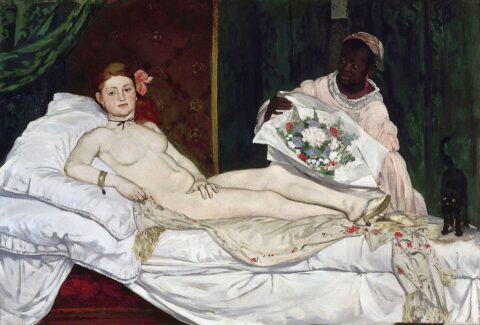
Eduard Manet, Olympia, oil on Canvas, 1863.
The Impressionists opened the modern floodgates in terms of bodily representations in art. Along with rejecting the Salon’s strict Neoclassical ideals, the impressionists also allowed for an expansion in terms of content, favouring an exploration of modern scenes and highlighting the lives of everyday people. Later on, Expressionist, Surrealist, and Abstract artists pushed the boundaries even further, depicting the body with a focus on emotion, expression, and the unconscious.
In the conceptual and post-modern worlds of art, the flesh was further deconstructed within the mediums of performance, photography, and video art. Works of the Fluxus movement explored exposed flesh along with themes of nudity and consent, such as Yoko Ono’s Cut Piece and Bottoms. Later, Marina Abramović’s flesh became the target of violence in her work Rhythm 0.
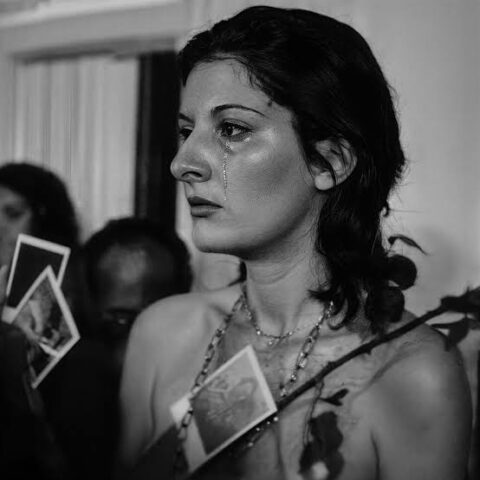
Marina Abramović, Rhythm 0, perfromance photo, 1974.
Contemporary artists continue to use the flesh as a space to explore the intersections of their own identities, building upon the legacies of artists before them. For this catalogue spotlight I’ve gathered together four works that focus on the flesh as a site of expression and disturbance.
In the words of Cole Porter, I've got you... Under my skin 
- Jo Reimer, Collections and Distribution Assistant
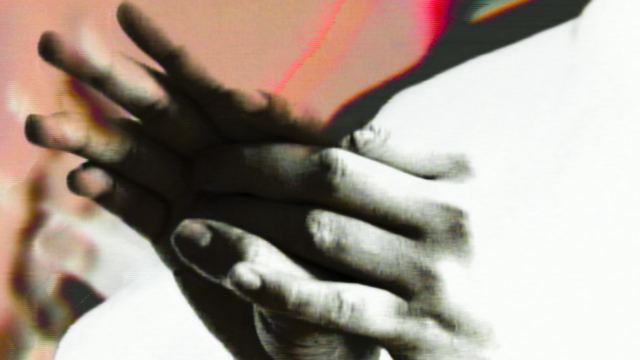
Atopic by Herlinda Dalayoan, 2026
Atopic is an experimental short film that uses analogue video processes to glitch skin textures, viewing the body as a technological system that retains cultural memory. The work investigates how Atopic Dermatitis (eczema) results from diasporic displacement and persists in an environment the body was not made for.

(opens in new t
My Flesh Crawls by Alison Davis, 2018
Your flesh is porous. If you are not vigilant something could slip through. It is important to check yourself over and then check again. This hand-painted animation will show you how.
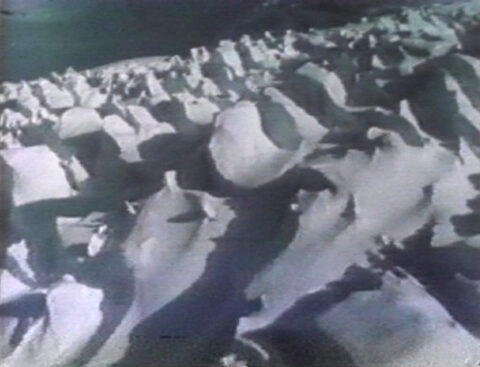
Surface Damage by Hope Peterson, 1992
A variety of scars on women’s bodies are labeled either “surgical”, “self-inflicted” or “other”. The categories break down and overlap as the tape progresses, the image interrupted from time to time by scenes of a scarification. These sequences are interspersed with appropriated images of mountains and avalanches, with accompanying text. A metaphor is developed between natural disasters and the arbitrary control and violence which affects women. Unexpected survival strategies emerge in the attempt to gain self-determination and transcend the loss of power over the body.
(Content warning for those who are sensitive to visuals of self harm)

Skin Flick by Milada Kovacova, 1991
As a textual surface, skin becomes the privileged vehicle for the representation of history. A site from which culture defines spatial concepts of containment and exclusion, the marked skin is the point of entry for an analysis of institutions, economic processes and ethical systems. A metaphor for external boundaries, the tattoo traces an architectural system of social discipline applicable to prisons, factories, schools, warehouses: all the places that operate on principles of isolation and surveillance.
If you're interested in inquiring about bringing your work into our catalogue please contact madeline@videopool.org